

01
Provider Submits Your Letter
After a licensed mental health professional completes and signs an eligible ESA document, it is prepared for delivery and verification.
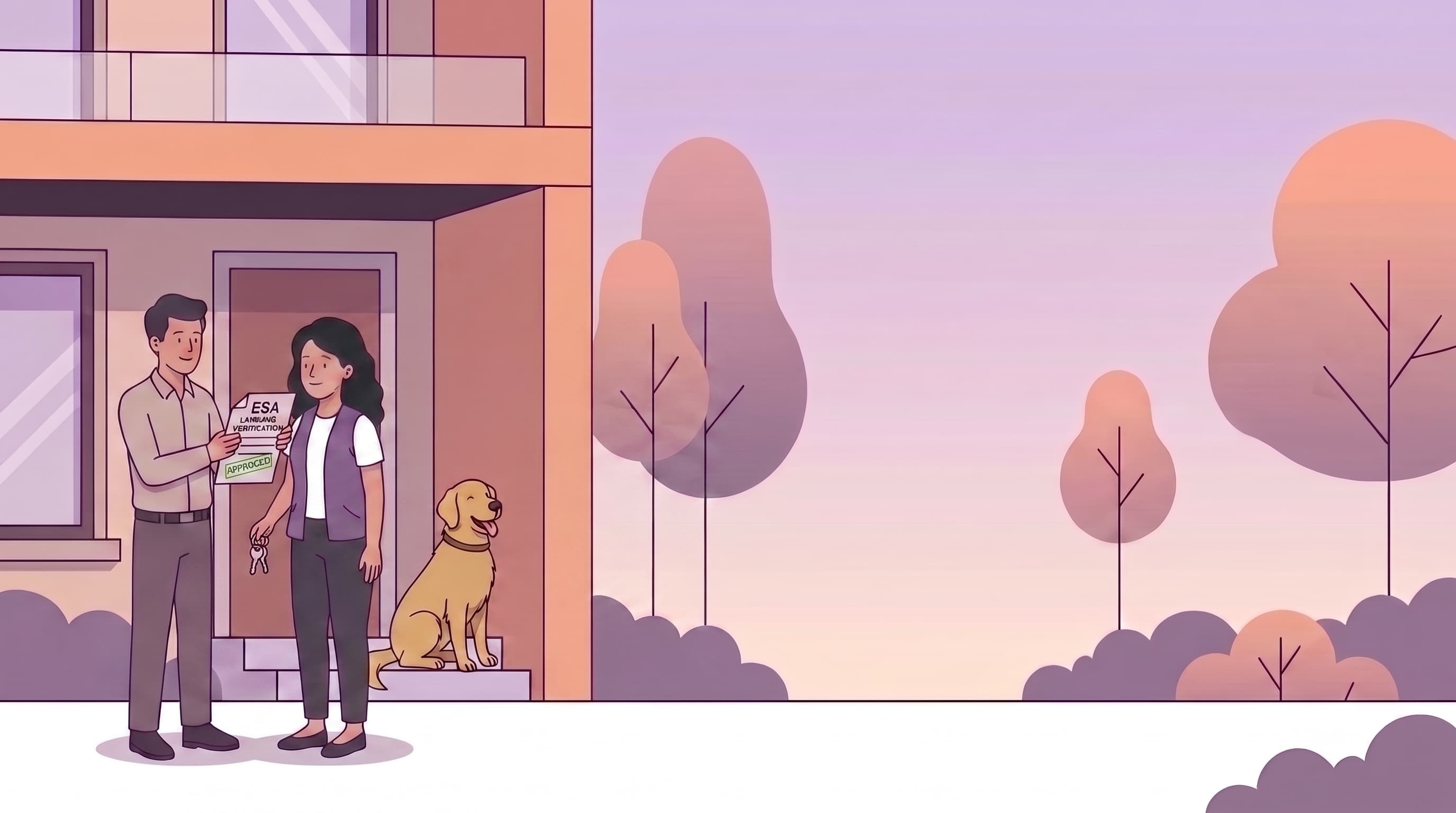
From a completed letter to a landlord-facing document check, each step is designed to stay clear and privacy-conscious.
After a licensed mental health professional completes and signs an eligible ESA document, it is prepared for delivery and verification.
A discrete 12-digit verification number and, where used, a QR code are placed on the document. The supplied specimen shows the intended presentation.
The customer receives the signed letter with its provider details, issue date and verification identifier clearly presented.
When the live verification service is connected, a landlord can scan or enter the 12-digit number to review limited document status. Verification is not an approval decision.
This specimen is for demonstration only. Its names, dates, identifiers and QR code do not belong to a real person, provider or issued letter.
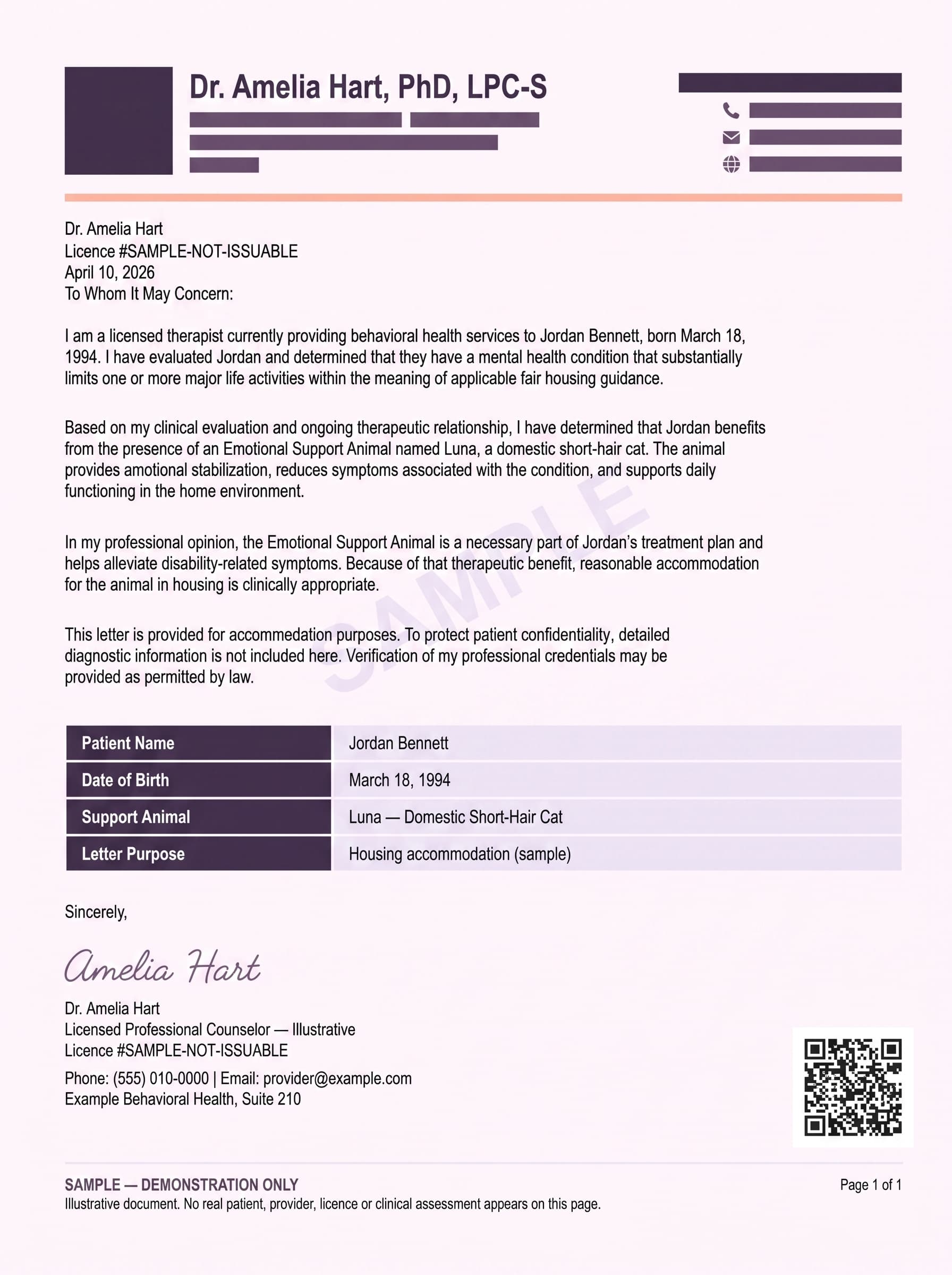
A sample image can show layout and document fields, but it cannot be used to verify a real person, provider, license or clinical assessment.
The intended landlord view is limited to information needed to check the document and its issuer. It does not expose detailed clinical information or decide the accommodation request.
Live confirmation depends on the verification service being connected. This page does not simulate a successful result, and document verification does not guarantee acceptance under every housing rule.
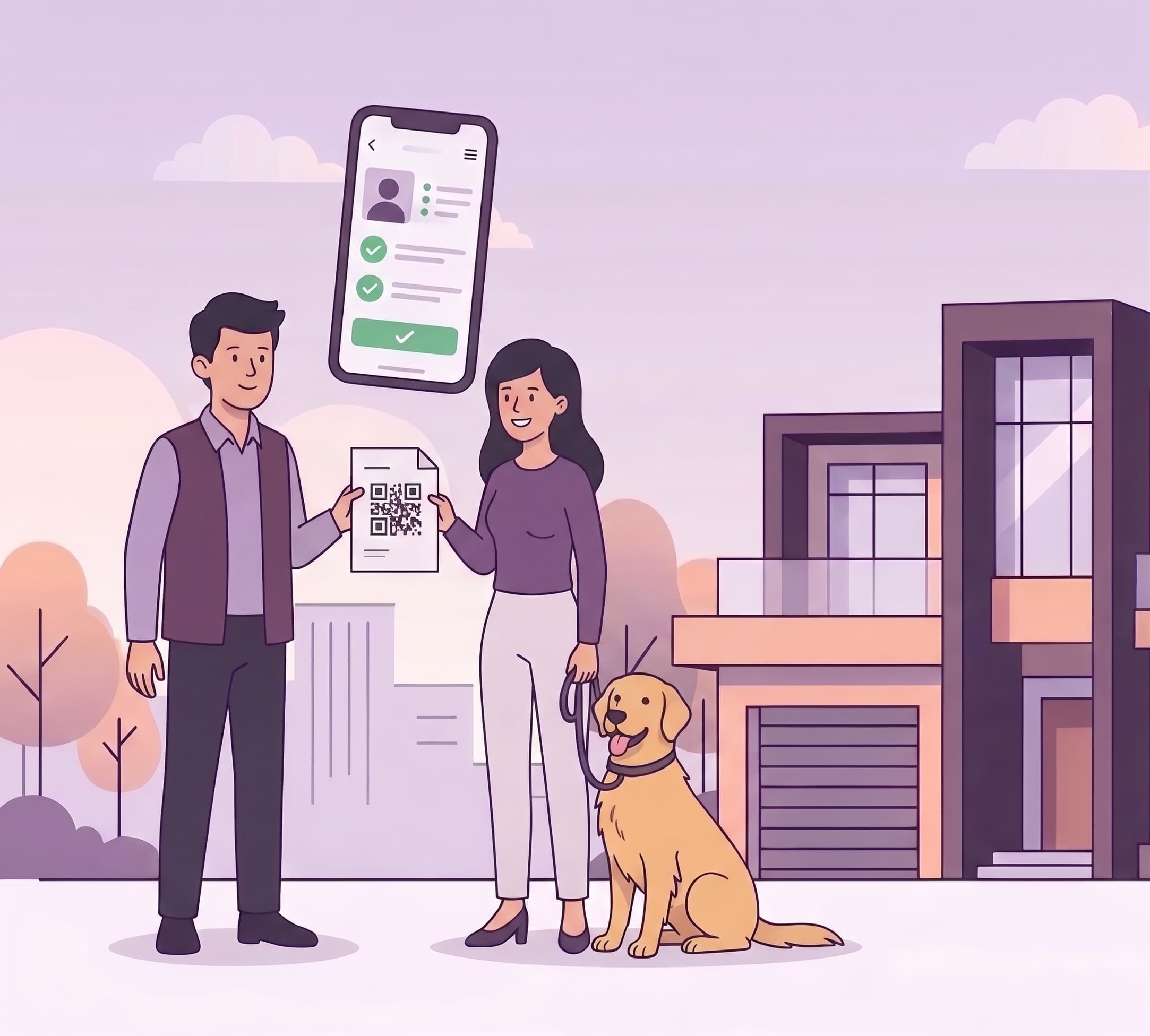
The verification experience is designed to separate a document-authenticity check from unnecessary sensitive clinical information.
Privacy obligations depend on the parties and applicable law. This educational summary does not claim that no information is stored or processed.
Each item gives a housing provider a separate document detail to review without turning verification into a clinical record search.
Eligible documentation reflects an individual evaluation and signature by an appropriately licensed mental health professional.
The provider’s name, credential and license information appear on the document rather than a generic company signature.
An NPI can be checked in the public CMS NPPES Registry when a provider has one. An NPI record does not itself validate licensure.
Where used, the QR code accompanies a unique verification number and points to the verification entry experience.
The date shown on the document helps a housing provider understand when the clinician issued it.
The existing verification form accepts a 12-digit number. A confirmed result depends on the live verification service being connected.
A letter can support a housing accommodation request by documenting a disability-related need. Verification confirms document information; it does not guarantee that a particular request must be approved.
Questions can be directed through PetHousingRights support channels, while the landlord-facing check remains limited to document and provider information rather than unnecessary clinical detail.
A careful clinical process and privacy-conscious verification make documentation easier for residents and housing providers to understand.
Documentation is issued through an individual clinical process by an appropriately licensed mental health professional using independent clinical judgment.
The documentation is structured to support a housing accommodation request without promising automatic approval or replacing individualized review.
A real clinical consultation lets the professional evaluate the person’s circumstances before deciding whether documentation is appropriate.
Verification details help a housing provider confirm that a document is authentic without exposing a diagnosis or private treatment information.
Verification should confirm authenticity without disclosing diagnosis, treatment notes or other private clinical information.