


ESA vs PSD

Trusted by 10,000+ pet owners all across the USFull refund if your letter doesn't workRated 4.9 stars
An illustrated woman with a cat opposite a man with a psychiatric service dog in a pastel park
Support animal types

ESA vs PSD

Turn each card over for a concise explanation. Hover with a mouse, or use tap, Enter or Space.

PSD education

Understanding Psychiatric Service Dogs

Three common questions, explained in plain language so the role of training, task work and documentation stays clear.

What Is a Psychiatric Service Dog?

A psychiatric service dog is individually trained to perform work or tasks for a person with a psychiatric disability. The trained task — not a vest, certificate or registration — is what makes the dog a service animal under the ADA.

  • The task must be directly related to the handler’s disability
  • Any dog breed or size can qualify when the ADA requirements are met
  • Comfort from the dog’s presence alone is not a trained service task
  • The handler remains responsible for keeping the dog under control

A clinician’s letter may support a care or housing conversation, but it does not by itself create public-access rights or certify a dog as a service animal.


An illustrated German shepherd wearing a camouflage cap

Can Any Animal Be an ESA or PSD?

The terms describe different kinds of support. Emotional support animals can include different species in housing contexts; under the ADA, a psychiatric service animal is a dog trained for disability-related task work.

  • An ESA’s role is emotional comfort rather than trained task work
  • A PSD is a service dog, not a therapy dog or pet registration category
  • A dog’s breed does not decide whether it can be a service animal
  • Housing and public-access questions follow different legal frameworks

Labels sold online do not change an animal’s legal status. The animal’s role, training and the applicable setting matter.

A person seated on an airplane with a German shepherd service dog

Why Trained Task Work Matters

A PSD’s work is specific to the handler’s disability. Training should produce reliable, purposeful behavior that helps in a real disability-related situation.

  • Interrupting or responding to a panic episode
  • Guiding a handler to a safer place during disorientation
  • Reminding a handler to take prescribed medication
  • Waking a handler from a disability-related nightmare

These are examples, not a checklist. The appropriate task depends on the individual, and the dog must be trained to perform it reliably.

A person walking with an illustrated German shepherd in a city park

Legal summary based on the U.S. Department of Justice ADA service-animal guidance. Rules can depend on the setting and individual facts.

A clearer comparison

Key Differences Between ESAs & PSDs

Both can support a person with a disability, but their roles, training and legal frameworks are different.

Emotional Support Animals (ESA)

  • Provides emotional comfort and companionship
  • Does not require disability-related task training
  • May include different species in housing contexts
  • Housing accommodations may apply under applicable law
  • Does not have general public-access rights under the ADA
Get Your ESA Now!

Psychiatric Service Dogs (PSD)

  • Is a service dog when the applicable ADA requirements are met
  • Is trained for specific disability-related work or tasks
  • Is a dog under the federal ADA service-animal definition
  • Housing protections follow the applicable assistance-animal framework
  • May have public-access rights when ADA requirements are met
Get Your PSD Now
ESA education

A Clearer Look at ESA Letters

Three common questions, answered in plain language so you can understand the document, your animal and the professional behind the process.

What is an Emotional Support Animal (ESA) Letter?

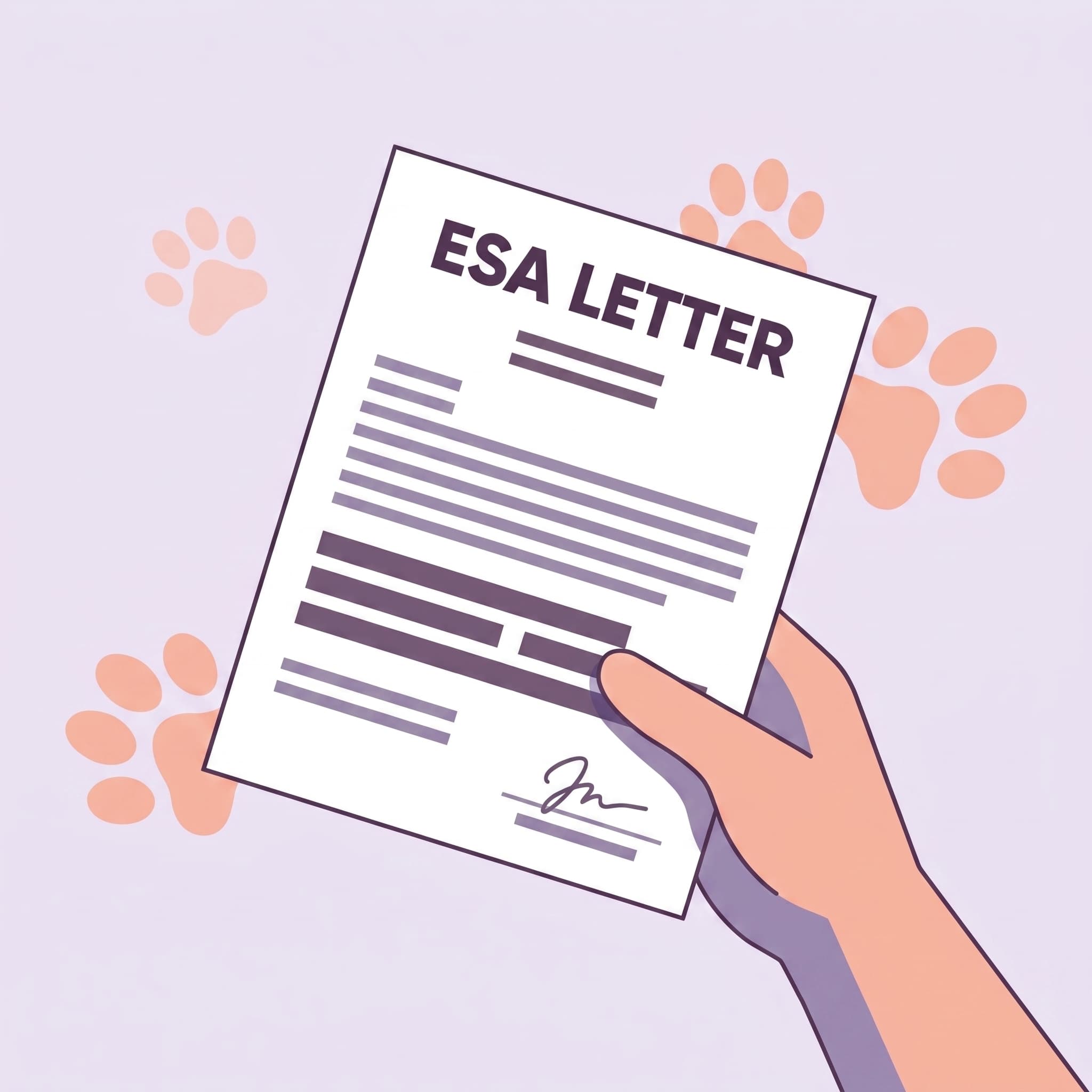
An ESA letter is documentation from a licensed health care professional. It explains a disability-related need for an assistance animal so a housing provider can consider a reasonable-accommodation request.

  • Written and signed by a licensed professional with knowledge of your situation
  • Includes useful professional and license information
  • Connects your need for the animal to your housing accommodation request
  • Does not need to disclose your complete medical history or diagnosis

An ESA letter is supporting documentation. It does not guarantee that a housing request will be approved.

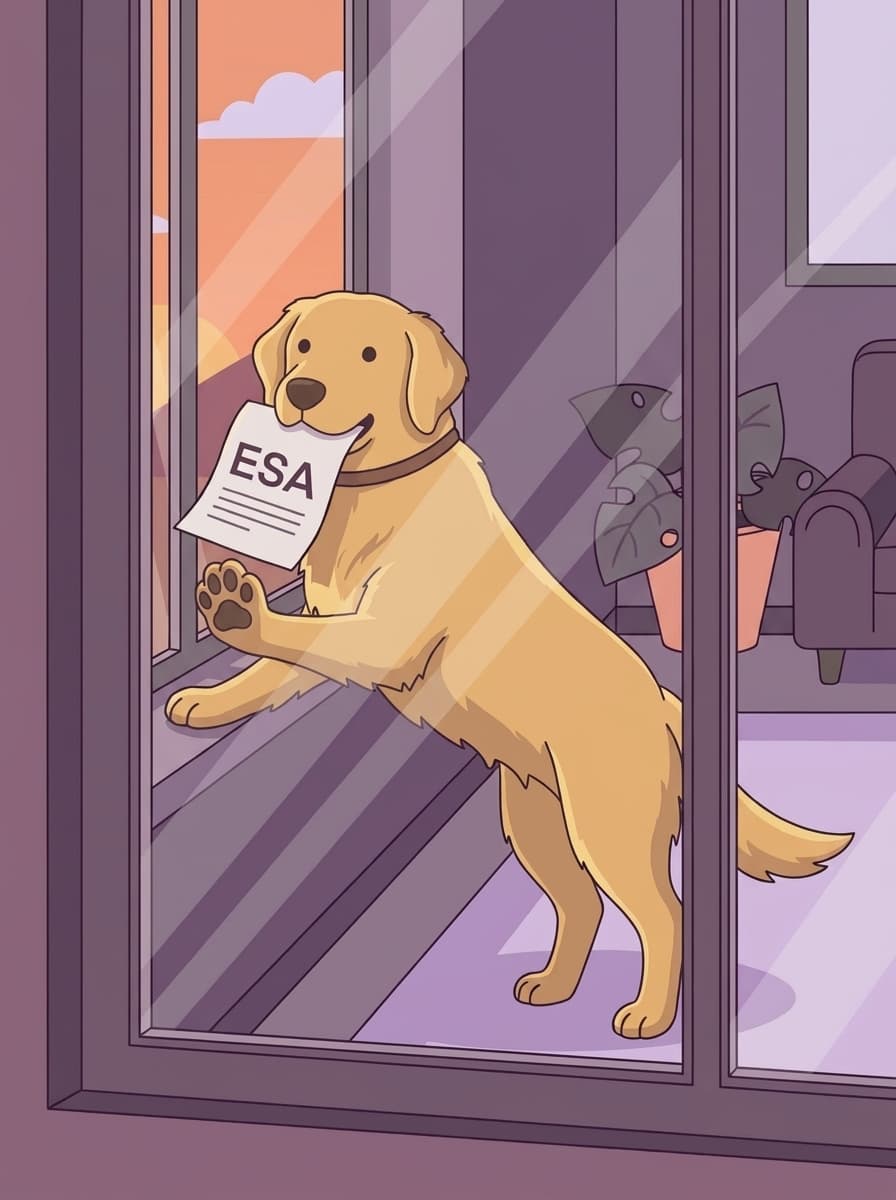
A golden retriever holding an ESA letter at a glass door

What Pets Can Be Emotional Support Animals?

Assistance animals in housing are not limited to one species. What matters is the disability-related support the animal provides and the circumstances of the accommodation request.

  • Dogs and cats are common emotional support animals
  • Rabbits, hamsters, guinea pigs and birds may also provide support
  • The animal does not need service-animal task training
  • The animal still needs to be safe and manageable in the home

Housing providers may ask for additional information about less commonly kept animals or specific accommodation needs.

A woman hugging a golden retriever in a calm living room

How to Know if an ESA Letter Provider is Legit?

A trustworthy provider is transparent about who evaluates you, how the process works and what the resulting documentation can — and cannot — do.

  • A real licensed professional is involved in your evaluation
  • The process includes an individual conversation, not only a checkout form
  • Pricing, communication and next steps are explained clearly
  • There are no promises of instant approval or lifetime certification

Paid registries and certificates do not replace reliable documentation from a health care professional.

A woman reviewing an ESA letter with a magnifying glass while a dog sits beside her
ESA or PSD?

How to Decide Between an ESA and a PSD

Choosing between a psychiatric service dog and an emotional support animal depends on your needs. An ESA provides emotional comfort, while a PSD is trained to perform disability-related tasks and may support public outings.

PetHousingRights provides clear guidance for both ESAs and PSDs.

Questions & answers

It’s okay to have questions.

Starting something new can bring a lot of questions. We’ve answered some of the things people ask us most often.

  • An Emotional Support Animal is a companion animal that provides comfort and emotional support as part of a person’s overall mental-health wellbeing. Unlike a service animal, it isn’t trained to perform specific tasks.

  • Whether an ESA may be appropriate is personal and depends on your individual situation. A licensed mental health professional can help you understand your circumstances and whether an ESA may be clinically appropriate.

  • Yes. Any documentation is provided only after a licensed mental health professional takes the time to understand your situation through an evaluation.

  • No. A service animal is individually trained to perform specific tasks related to a person’s disability. An ESA offers companionship and emotional comfort and is not required to have specialized task training.

  • You’ll have a conversation with a licensed professional who takes time to understand what you’re experiencing. There’s no pressure — it’s a supportive, judgment-free space to talk through your situation.

  • When clinically appropriate, an ESA letter is documentation from a licensed mental health professional. Your specific diagnoses are kept private and are not disclosed in the documentation.

  • Your personal information is handled with care and respect. We take your privacy seriously at every step of the process.

  • Documentation from a licensed mental health professional includes the information needed for appropriate verification, while keeping your private health details confidential.

  • That’s completely okay. If an ESA isn’t clinically appropriate for your situation, the professional will let you know honestly and help you understand your options.

  • The timeline can vary depending on your situation and availability. We’ll keep you informed and support you along the way so you always know your next step.

Still have questions? We're here to help.

Contact PetHousingRights
Need help?